The Rose Bar Reborn: A Night at the Most Legendary Address in Miami
El Rose Bar Renacido: Una Noche en la Dirección Más Legendaria de Miami
Il Rose Bar Rinato: Una Notte nell'Indirizzo Più Leggendario di Miami
O Rose Bar Renascido: Uma Noite no Endereço Mais Lendário de Miami
By Dora Kovacs · November 2025 · 5 min read
Por Dora Kovacs · Noviembre 2025 · 5 min de lectura
Di Dora Kovacs · Novembre 2025 · 5 min di lettura
Por Dora Kovacs · Novembro 2025 · 5 min de leitura
There are three or four rooms in the world whose names, spoken among a certain kind of person, carry a charge that requires no further explanation. Bemelmans in New York. Harry's in Venice. American Bar at the Savoy. And, for a thirty-year run that began in the summer of 1995, the Delano Rose Bar in South Beach. Now, after a decade-long hiatus that felt at times like a deliberate withholding, the Rose Bar is preparing to return — reborn inside Delano Residences & Hotel Miami, at an address that promises to redefine the myth for a new generation.
Hay tres o cuatro habitaciones en el mundo cuyos nombres, pronunciados entre un cierto tipo de persona, llevan una carga que no requiere más explicación. Bemelmans en Nueva York. Harry's en Venecia. American Bar en el Savoy. Y, durante una carrera de treinta años que comenzó en el verano de 1995, el Delano Rose Bar en South Beach.
Ci sono tre o quattro stanze nel mondo i cui nomi, pronunciati tra un certo tipo di persone, portano una carica che non richiede ulteriori spiegazioni. Bemelmans a New York. Harry's a Venezia. American Bar al Savoy. E, per una corsa trentennale che è iniziata nell'estate del 1995, il Delano Rose Bar a South Beach. Ora, dopo una pausa decennale che a volte sembrava una sospensione deliberata, il Rose Bar si sta preparando a tornare — rinato all'interno di Delano Residences & Hotel Miami, a un indirizzo che promette di ridefinire il mito per una nuova generazione.
Há três ou quatro quartos no mundo cujos nomes, quando falados entre um certo tipo de pessoa, carregam uma carga que não requer explicação adicional. Bemelmans em Nova York. Harry's em Veneza. American Bar no Savoy. E, por uma série de trinta anos que começou no verão de 1995, o Delano Rose Bar em South Beach. Agora, após um hiato de uma década que às vezes parecia uma retenção deliberada, o Rose Bar está se preparando para retornar — renascido dentro de Delano Residences & Hotel Miami, em um endereço que promete redefinir o mito para uma nova geração.
What Made the Original
Lo Que Hizo al Original
Cosa Ha Reso l'Originale
O Que Tornou o Original
The original Rose Bar opened inside Ian Schrager and Philippe Starck's reimagined Delano Hotel on Collins Avenue, amid the white muslin curtains and oversized outdoor chessboards that would become the most photographed interior design of the 1990s. What began as a hotel lobby bar quickly became something much larger — a meeting place whose door policy was less about exclusion than about a certain quality of social gravity. On any given night in the late 1990s, the room might contain Madonna, Calvin Klein, Leonardo DiCaprio, a sitting president's daughter, two European princes, an off-duty Supreme Court justice, and a handful of Miami locals who had simply figured out, before everyone else, where to be.
El Rose Bar original abrió dentro del Delano Hotel reimaginado por Ian Schrager y Philippe Starck en Collins Avenue, entre las cortinas de muselina blanca y los tableros de ajedrez gigantes que se convertirían en el diseño interior más fotografiado de los años 1990.
Il Rose Bar originale è stato aperto dentro l'hotel Delano reimaginato di Ian Schrager e Philippe Starck su Collins Avenue, in mezzo alle tende di mussola bianca e ai tavoli da scacchi all'aperto sovradimensionati che sarebbero diventati il design d'interni più fotografato degli anni '90. Quello che è iniziato come un bar nella lobby dell'hotel è rapidamente diventato qualcosa di molto più grande — un luogo di incontro la cui politica della porta era meno sull'esclusione che su una certa qualità di gravità sociale. In una qualsiasi notte alla fine degli anni '90, la stanza potrebbe contenere Madonna, Calvin Klein, Leonardo DiCaprio, la figlia di un presidente in carica, due principi europei, un giudice della Corte Suprema fuori dal lavoro, e una manciata di locali di Miami che avevano semplicemente capito, prima di tutti gli altri, dove stare.
O Rose Bar original abriu dentro do hotel Delano reimaginado de Ian Schrager e Philippe Starck na Collins Avenue, em meio aos cortinados de musselina branca e tabuleiros de xadrez ao ar livre superdimensionados que se tornariam o design de interiores mais fotografado dos anos 90. O que começou como um bar da lobby do hotel rapidamente se tornou algo muito maior — um lugar de encontro cuja política de porta era menos sobre exclusão do que sobre uma certa qualidade de gravidade social. Em qualquer noite do final dos anos 90, a sala poderia conter Madonna, Calvin Klein, Leonardo DiCaprio, a filha de um presidente em exercício, dois príncipes europeus, um juiz da Corte Suprema fora do serviço e um punhado de locais de Miami que simplesmente descobriram, antes de todos os outros, onde estar.
What set the Rose Bar apart was not its glamour — Miami has never lacked for glamour — but its peculiar alchemy of scale and intimacy. The room was not large. The cocktail list was not long. The door policy was firm but never theatrical. The result was a space that felt, in the best possible way, like a private party to which you had been invited specifically — even when the person beside you had been on the cover of Vogue the previous week.
Lo que distinguió al Rose Bar no fue su glamour — Miami nunca ha carecido de glamour — sino su peculiar alquimia de escala e intimidad. La habitación no era grande. La lista de cócteles no era larga. La política de la puerta era firme pero nunca teatral.
Quello che ha distinto il Rose Bar non era il suo glamour — Miami non ha mai mancato di glamour — ma la sua particolare alchimia di scala e intimità. La stanza non era grande. La lista dei cocktail non era lunga. La politica della porta era ferma ma mai teatrale. Il risultato era uno spazio che si sentiva, nel miglior modo possibile, come una festa privata a cui eri stato invitato specificamente — anche quando la persona accanto a te era stata in copertina su Vogue la settimana precedente.
O que destacava o Rose Bar não era seu glamour — Miami nunca teve falta de glamour — mas sua alquimia peculiar de escala e intimidade. A sala não era grande. A lista de coquetéis não era longa. A política de porta era firme, mas nunca teatral. O resultado era um espaço que parecia, da melhor maneira possível, como uma festa privada para a qual você havia sido especificamente convidado — mesmo quando a pessoa ao seu lado tinha estado na capa da Vogue na semana anterior.
"The Rose Bar wasn't famous because famous people went there. Famous people went there because it was the only room in Miami where nobody cared that they were famous."
— Vanity Fair, 1998
"El Rose Bar no era famoso porque personas famosas iban allí. Las personas famosas iban allí porque era la única habitación en Miami donde a nadie le importaba que fueran famosas."
— Vanity Fair, 1998
1995
Original Rose Bar Opens
Rose Bar Original Abre
Apertura dell'Originale Rose Bar
Abertura do Original Rose Bar
30
Years of Myth-Making
Años de Creación de Mito
Anni di Creazione di Miti
Anos de Construção de Mitos
2026
Rebirth at Delano Miami
Renacimiento en Delano Miami
Rinascita a Delano Miami
Renascimento em Delano Miami
The Hiatus and the Return
El Hiato y el Retorno
La Pausa e il Ritorno
A Pausa e o Retorno
The original Delano South Beach closed for a full renovation in 2019 and, for reasons that had more to do with corporate repositioning than with any failure of the bar itself, the Rose Bar did not reopen with it. For the next several years, the absence of the room was felt more keenly than the absence of almost any other venue in the city. Miami had replaced it in a dozen ways — new hotel bars, new rooftop lounges, new imported European concepts — but none had captured the particular thing the Rose Bar had been.
El Delano South Beach original cerró para una renovación completa en 2019. Durante los siguientes años, la ausencia de la habitación se sintió más agudamente que la ausencia de casi cualquier otro lugar en la ciudad. Miami lo había reemplazado de una docena de maneras — nuevos bares de hotel, nuevos salones en la azotea, nuevos conceptos europeos importados — pero ninguno había capturado la cosa particular que el Rose Bar había sido.
L'originale Delano South Beach ha chiuso per una completa ristrutturazione nel 2019 e, per ragioni che avevano più a che fare con il riposizionamento aziendale che con qualsiasi fallimento del bar stesso, il Rose Bar non ha riaperto con esso. Per i successivi diversi anni, l'assenza della stanza è stata sentita più acutamente dell'assenza di quasi qualsiasi altro venue in città. Miami l'aveva sostituito in una dozzina di modi — nuovi hotel bar, nuovi lounge sul tetto, nuovi concetti europei importati — ma nessuno aveva catturato la cosa particolare che il Rose Bar era stato.
O Delano South Beach original fechou para uma reforma completa em 2019 e, por razões que tinham mais a ver com reposicionamento corporativo do que com qualquer falha do bar em si, o Rose Bar não reabre com ele. Pelos vários anos seguintes, a ausência da sala foi sentida mais agudamente do que a ausência de quase qualquer outro local na cidade. Miami a havia substituído de uma dúzia de maneiras — novos bares de hotel, novos lounges no telhado, novos conceitos europeus importados — mas nenhum tinha capturado a coisa particular que o Rose Bar havia sido.
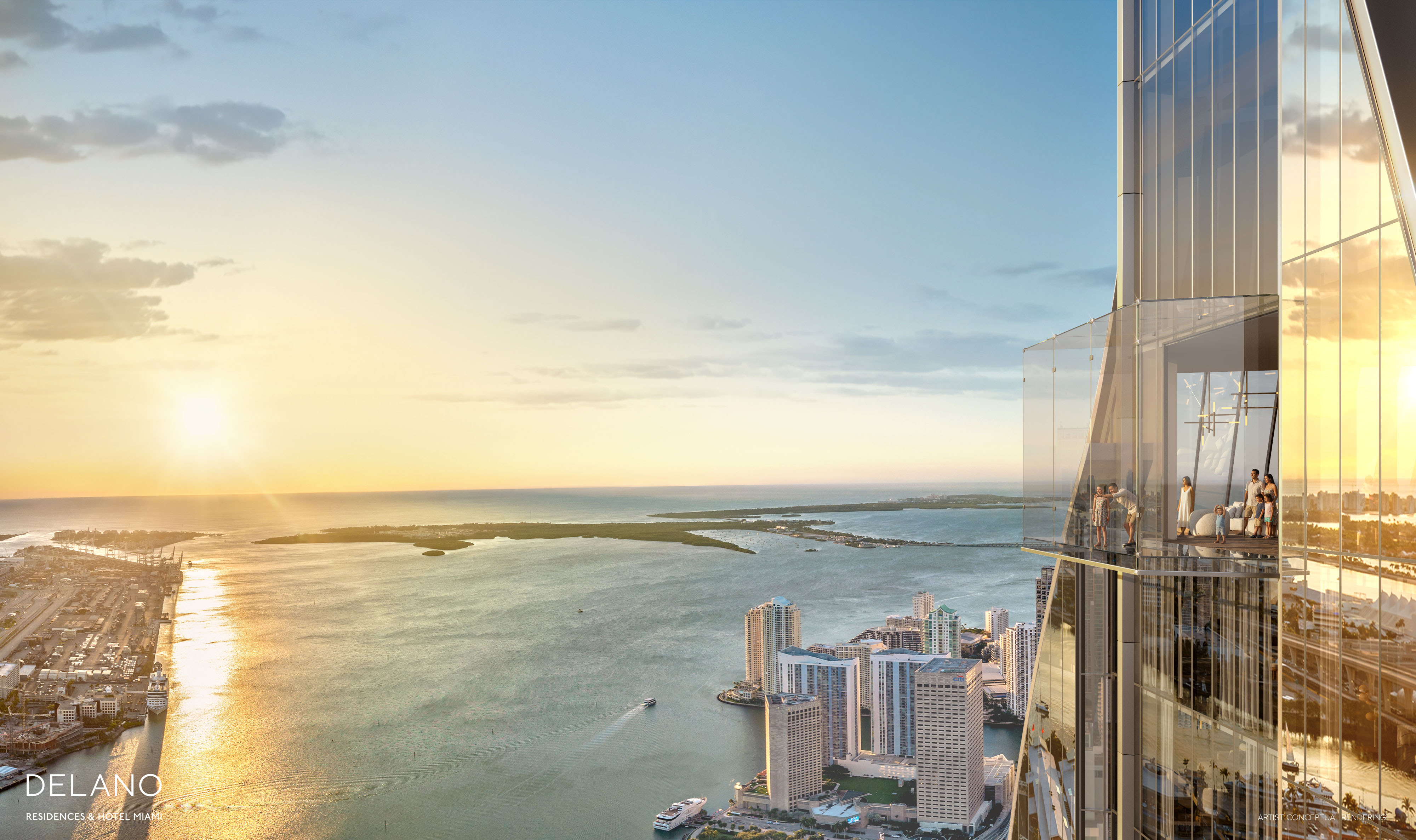
Now, as part of the new Delano Residences & Hotel Miami on Biscayne Boulevard, the Rose Bar is being rebuilt — not replicated — on the ground floor of the 90-story supertall. The stewardship is being handled by Ennismore, the hospitality group that has managed the Delano brand globally since 2020, in collaboration with Meyer Davis and a small team of former Rose Bar staff who have, remarkably, remained in contact for the entirety of the hiatus.
Ahora, como parte del nuevo Delano Residencias & Hotel Miami en Biscayne Boulevard, el Rose Bar está siendo reconstruido — no replicado — en la planta baja del supertall de 90 pisos.
Ora, come parte della nuova Delano Residences & Hotel Miami su Biscayne Boulevard, il Rose Bar viene ricostruito — non replicato — al piano terra del grattacielo di 90 piani. La supervisione è stata affidato a Ennismore, il gruppo di ospitalità che ha gestito il marchio Delano a livello globale dal 2020, in collaborazione con Meyer Davis e un piccolo team di ex personale del Rose Bar che, notevolmente, è rimasto in contatto per l'intera durata della pausa.
Agora, como parte da nova Delano Residences & Hotel Miami na Avenida Biscayne, o Rose Bar está sendo reconstruído — não replicado — no térreo do arranha-céu de 90 andares. A administração está sendo feita pela Ennismore, o grupo de hospitalidade que administrou a marca Delano globalmente desde 2020, em colaboração com Meyer Davis e um pequeno time de ex-funcionários do Rose Bar que, notavelmente, permaneceram em contato durante toda a pausa.
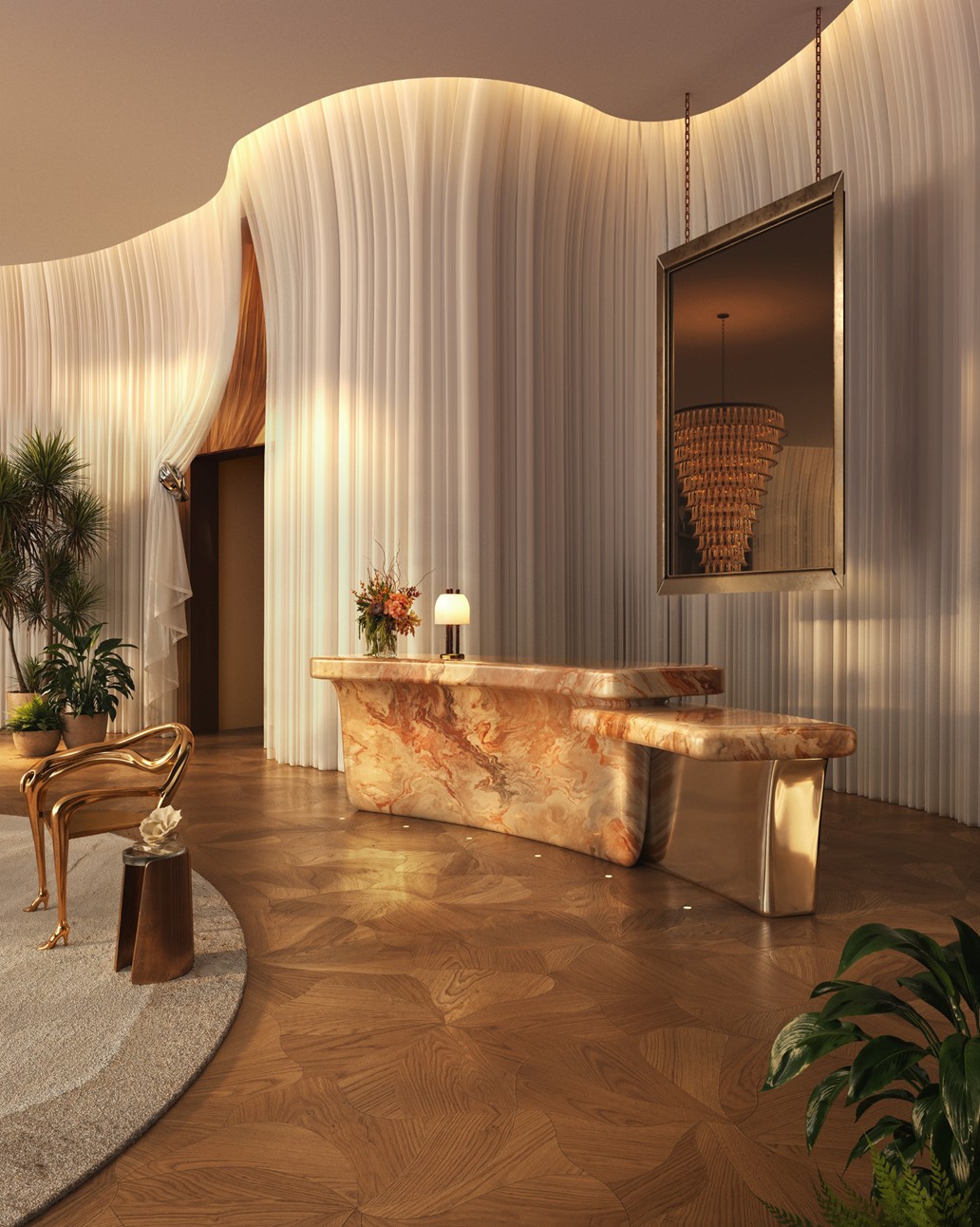
The hotel lobby that leads to the new Rose Bar — travertine, tufted velvet, and the particular soft lighting that made the original room impossible to photograph badly.El lobby del hotel que lleva al nuevo Rose Bar — travertino, terciopelo tufteado y la particular iluminación suave que hizo que la habitación original fuera imposible de fotografiar mal.
Inside the New Room
Dentro de la Nueva Habitación
Dentro la Nuova Stanza
Dentro do Novo Espaço
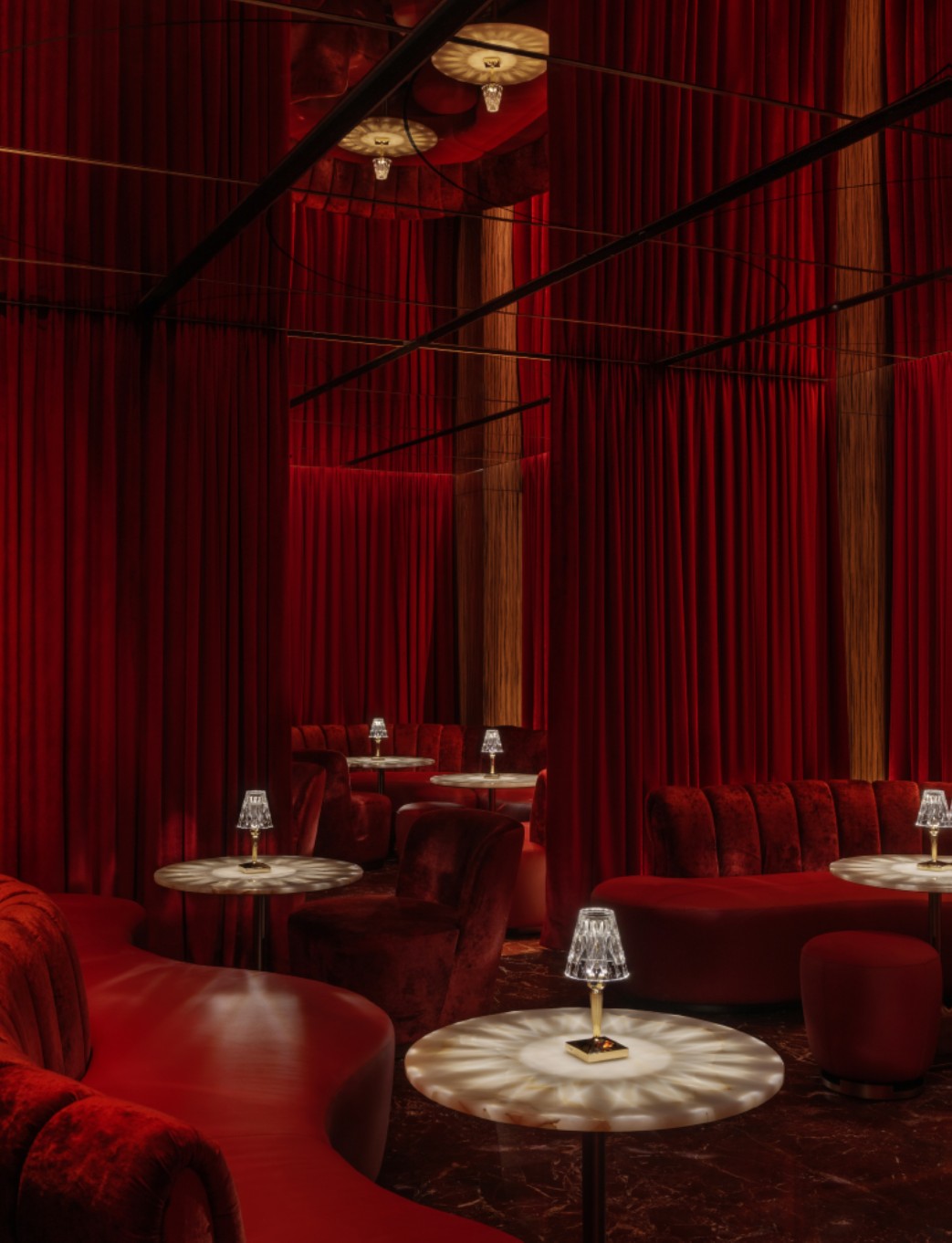
Meyer Davis has resisted the temptation to reproduce the original Starck interiors — a decision that initially caused some apprehension among Rose Bar purists but has, in execution, proven entirely correct. The new Rose Bar is a room of its own: walls upholstered in rose-pink silk velvet that reads as neutral in most lighting and warm in candlelight; a bar counter carved from a single slab of Italian onyx, backlit in a way that makes the stone appear to glow from within; low, irregular seating arrangements that encourage the kind of lingering conversations the original room was known for.
Meyer Davis ha resistido la tentación de reproducir los interiores originales de Starck — una decisión que inicialmente causó cierta aprensión entre los puristas del Rose Bar pero que, en ejecución, ha demostrado ser completamente correcta.
Meyer Davis ha resistito alla tentazione di riprodurre gli interni originali di Starck — una decisione che inizialmente ha causato qualche apprensione tra i puristi del Rose Bar, ma che, nell'esecuzione, ha provato di essere interamente corretta. Il nuovo Rose Bar è una stanza sua: pareti rivestite in velluto di seta rosa rosa che legge come neutrale nella maggior parte dell'illuminazione e caldo alla luce delle candele; un bancone del bar scolpito da una singola lastra di onice italiano, illuminato da dietro in modo da far sembrare la pietra brillare dall'interno; arrangiamenti di sedute bassi e irregolari che incoraggiano il tipo di conversazioni prolungate per cui la stanza originale era nota.
Meyer Davis resistiu à tentação de reproduzir os interiores originais de Starck — uma decisão que inicialmente causou apreenção entre puristas do Rose Bar, mas que, na execução, provou estar totalmente correta. O novo Rose Bar é uma sala por si só: paredes estofadas em veludo de seda rosa-rosa que se lê como neutro na maioria das iluminações e morno à luz de velas; um balcão do bar esculpido em uma única laje de ônix italiano, iluminado de trás de uma forma que faz a pedra parecer brilhar de dentro; arranjos de assentos baixos e irregulares que encorajam o tipo de conversas prolongadas que a sala original era conhecida.
The Cocktail Program
El Programa de Cócteles
Il Programma dei Cocktail
O Programa de Coquetéis
The opening cocktail program has been developed by a team led by a former head bartender from the original Rose Bar, now returning after fifteen years in New York and Tokyo. The list is deliberately short — twelve drinks, most of them reinterpretations of the originals. The Rosebud (rose-infused gin, pink grapefruit, a drop of bitter orange). The Collins Avenue (an improved martini, which is to say a better-kept secret than any other). The Miami 1947 (a local rum negroni that traces its proportions to the year the first Delano Hotel opened). The drinks arrive quickly, without ceremony, and disappear for the same reason.
El programa de cócteles inaugural ha sido desarrollado por un equipo liderado por un ex jefe de bar del Rose Bar original, ahora regresando después de quince años en Nueva York y Tokio. La lista es deliberadamente corta — doce tragos, la mayoría de ellos reinterpretaciones de los originales.
Il programma di apertura dei cocktail è stato sviluppato da un team guidato da un ex capo barista del Rose Bar originale, che ora torna dopo quindici anni a New York e Tokyo. La lista è deliberatamente breve — dodici drink, la maggior parte dei quali reinterpretazioni degli originali. Il Rosebud (gin infuso di rosa, pompelmo rosa, una goccia di arancia amara). The Collins Avenue (un martini migliorato, cioè un segreto meglio custodito di qualsiasi altro). The Miami 1947 (un negroni di rum locale che traccia le sue proporzioni all'anno in cui il primo Delano Hotel ha aperto). I drink arrivano velocemente, senza cerimonia, e scompaiono per lo stesso motivo.
O programa de abertura de coquetel foi desenvolvido por um time liderado por um ex-chefe bartender do Rose Bar original, agora retornando após quinze anos em Nova York e Tóquio. A lista é deliberadamente curta — doze drinks, a maioria deles reinterpretações dos originais. O Rosebud (gim infundido de rosa, toranja rosa, uma gota de laranja amarga). The Collins Avenue (um martini melhorado, ou seja, um segredo mais bem guardado do que qualquer outro). The Miami 1947 (um negroni de rum local que rastreia suas proporções ao ano em que o primeiro Delano Hotel abriu). Os drinks chegam rapidamente, sem cerimônia, e desaparecem pela mesma razão.
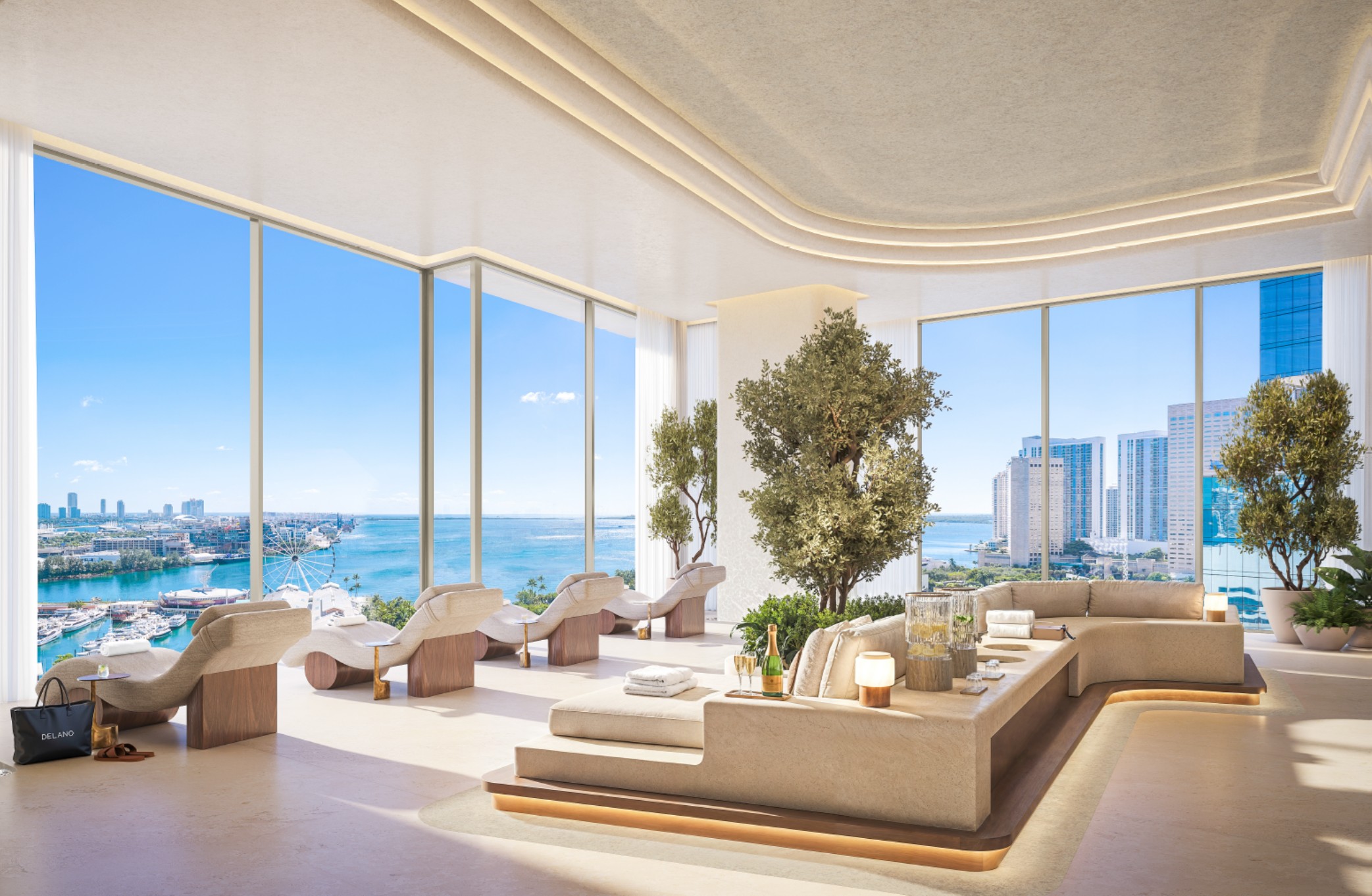
The sky lounge, one elevator ride from the Rose Bar, where late-night overflow often ends up. Same music, higher view, slightly looser dress code.El salón del cielo, a un viaje en ascensor del Rose Bar, donde a menudo termina el desbordamiento nocturno.
The Door Policy
La Política de la Puerta
La Politica della Porta
A Política da Porta
One detail that has survived the transition: the door. The Rose Bar operates with the same quiet, firm door policy that defined the original — a room for hotel guests, residents, and a small curated list of walk-ins who know, through whatever social channel, how to enter. There is no velvet rope. There is no visible list. There is simply a maître d' who has, in most cases, already been told who you are by the time you reach the entrance. The effect is not exclusion but a particular quality of welcome that ensures the room remains what it has always been — a social space operating at a frequency that cannot survive mass access.
Un detalle que ha sobrevivido a la transición: la puerta. El Rose Bar opera con la misma política de puerta silenciosa y firme que definió al original — una habitación para huéspedes del hotel, residentes y una pequeña lista curada.
Un dettaglio che ha superato la transizione: la porta. Il Rose Bar funziona con la stessa politica della porta tranquilla e ferma che ha definito l'originale — una stanza per gli ospiti dell'hotel, i residenti e una piccola lista curata di walk-in che sanno, attraverso qualunque canale sociale, come entrare. Non c'è corda di velluto. Non c'è lista visibile. C'è semplicemente un maître d' che, nella maggior parte dei casi, è già stato detto chi sei dal momento in cui raggiungi l'ingresso. L'effetto non è esclusione ma una particolare qualità di benvenuto che assicura che la stanza rimanga quello che è sempre stata — uno spazio sociale che funziona a una frequenza che non può sopravvivere all'accesso di massa.
Um detalhe que sobreviveu à transição: a porta. O Rose Bar funciona com a mesma política de porta tranquila e firme que definiu o original — uma sala para hóspedes do hotel, residentes e uma pequena lista selecionada de entrantes que sabem, através de qualquer canal social, como entrar. Não há corda de veludo. Não há lista visível. Há simplesmente um maître d' que, na maioria dos casos, já foi informado sobre quem você é no momento em que chega à entrada. O efeito não é exclusão, mas uma qualidade particular de boas-vindas que garante que a sala permaneça o que sempre foi — um espaço social operando em uma frequência que não pode sobreviver ao acesso em massa.
For residents of Delano Residences, the door operates on a different logic entirely. A private entrance connects the residential elevators to the lounge with complete discretion — a small doorway that opens behind the bar, allowing a resident to step into the Rose Bar without crossing the public lobby at all. It is the architectural expression of one of the premises on which the building has been conceived: that what residents pay for, above all, is the right not to be seen except when they want to be.
Para los residentes de Delano Residencias, la puerta opera con una lógica completamente diferente. Una entrada privada conecta los ascensores residenciales con el salón con discreción completa.
Per i residenti di Delano Residences, la porta opera con una logica completamente diversa. Un ingresso privato collega gli ascensori residenziali alla lounge con discrezione completa — una piccola porta che si apre dietro il bar, permettendo a un residente di entrare nel Rose Bar senza attraversare affatto la lobby pubblica. È l'espressione architettonica di una delle premesse su cui l'edificio è stato concepito: che quello che i residenti pagano, soprattutto, è il diritto di non essere visti se non quando vogliono essere visti.
Para os residentes de Delano Residences, a porta funciona com uma lógica completamente diferente. Uma entrada privada conecta os elevadores residenciais ao lounge com discrição total — uma pequena porta que se abre atrás do bar, permitindo que um residente entre no Rose Bar sem passar pelo lobby público. É a expressão arquitetônica de uma das premissas sobre as quais o edifício foi concebido: que o que os residentes pagam, acima de tudo, é o direito de não serem vistos, exceto quando querem ser.
"A room is a rumor before it is ever a room. The Rose Bar was the rumor of its generation."
"Una habitación es un rumor antes de ser una habitación. El Rose Bar fue el rumor de su generación."
"Una stanza è una voce prima di essere una stanza. The Rose Bar era la voce della sua generazione."
"Um quarto é um boato antes de ser um quarto. The Rose Bar era o boato de sua geração."
A Ritual, Not a Destination
Un Ritual, No un Destino
Un Rituale, Non una Destinazione
Um Ritual, Não um Destino
What the opening team has understood — perhaps better than any revival of a legendary room would normally manage — is that the Rose Bar was never really about the cocktails, or the music, or the interior. It was about a ritual. The particular quality of arriving somewhere at a particular hour and finding that the rest of your evening had already been resolved. The relief of not having to decide where to go next. The specific pleasure of a room that feels, genuinely, like it belongs to you.
For residents of the building, the Rose Bar will become precisely that again — a ritual held in a specific room, at a specific altitude of social life, that does not require planning or announcement. You simply go down. The lights are low, the onyx glows, the bar staff nod without a word, and whatever the rest of the week had been is, for a moment, pleasantly inconsequential.
Lo que el equipo de apertura ha entendido — quizás mejor de lo que cualquier renacimiento de una habitación legendaria normalmente lograría — es que el Rose Bar nunca se trató realmente de los cócteles, o la música, o el interior. Se trataba de un ritual.
Per i residenti dell'edificio, il Rose Bar diventerà ancora una volta esattamente quello — un rituale tenuto in una stanza specifica, a una specifica altitudine della vita sociale, che non richiede pianificazione o annuncio. Semplicemente scendi. Le luci sono basse, l'onice brilla, lo staff del bar fa cenno senza dire una parola, e qualunque sia stato il resto della settimana è, per un momento, piacevolmente irrilevante.
Para os residentes do edifício, o Rose Bar se tornará novamente exatamente isso — um ritual realizado em uma sala específica, em uma altitude específica da vida social, que não requer planejamento ou anúncio. Você simplesmente desce. As luzes estão baixas, a ônix brilha, a equipe do bar acena sem dizer uma palavra, e seja qual for o resto da semana, é, por um momento, piacevolmente irrelevante.
Share this storyCompartirCondividi questa storiaCompartilhe esta história
Dora Kovacs is a licensed Florida real estate agent (License #3502193) affiliated with Keller Williams. She represents buyers and investors in Miami's most sought-after pre-construction and luxury condominium developments. Contact: dora@bnsluxury.com · (305) 781-0210 · 1000 5th St, Suite 202, Miami Beach, FL 33139.
Dora Kovacs es agente inmobiliaria licenciada en Florida (Licencia #3502193), afiliada a Keller Williams. Representa a compradores e inversionistas en los desarrollos de pre-construcción y condominios de lujo más codiciados de Miami. Contacto: dora@bnsluxury.com · (305) 781-0210 · 1000 5th St, Suite 202, Miami Beach, FL 33139.
Dora Kovacs è un agente immobiliare autorizzato dalla Florida (Licenza #3502193) affiliato a Keller Williams. Rappresenta acquirenti e investitori negli sviluppi di condomini di lusso e pre-costruzione più ricercati di Miami. Contatti: dora@bnsluxury.com · (305) 781-0210 · 1000 5th St, Suite 202, Miami Beach, FL 33139.
Dora Kovacs è un agente immobiliare autorizzato dalla Florida (Licenza #3502193) affiliato a Keller Williams. Rappresenta acquirenti e investitori negli sviluppi di condomini di lusso e pre-costruzione più ricercati di Miami. Contatti: dora@bnsluxury.com · (305) 781-0210 · 1000 5th St, Suite 202, Miami Beach, FL 33139.
Private Pricing Available
Precios Privados Disponibles
Prezzo Privato Disponibile
Preço Privado Disponível
Interested in Delano Residences?¿Interesado en Delano Residences?Interessato a Delano Residences?Interessado em Delano Residences?
Receive the full residence catalogue, current pricing, and available floor plans — delivered privately within minutes.
Reciba el catálogo completo de residencias, precios actuales y plantas disponibles — entregado en minutos.
Ricevi il catalogo completo delle residenze, i prezzi attuali e le planimetrie disponibili — consegnati privatamente in pochi minuti.
Receba o catálogo completo de residências, preços atuais e plantas disponíveis — entregues em privado em poucos minutos.
or fill manuallyo completar manualmenteo compila manualmenteou preencha manualmente
✓ Thank you. Your private pricing package is on its way.✓ Gracias. Su paquete de precios está en camino.✓ Grazie. Il tuo pacchetto di prezzo privato è in arrivo.✓ Obrigado. Seu pacote de preço privado está a caminho.