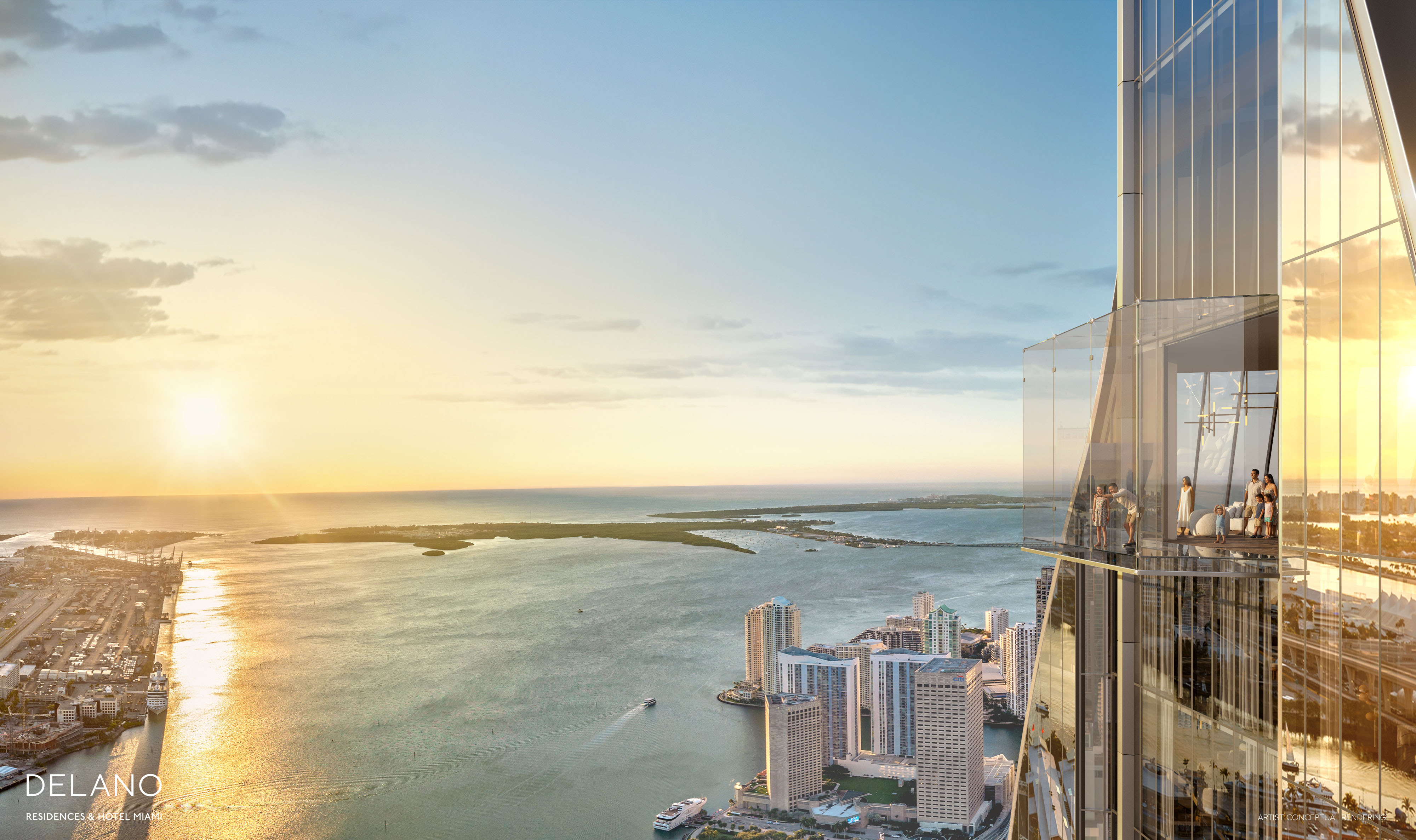
The Source by Delano: A New Philosophy of Wellness at 850 Feet
The Source by Delano: Una Nueva Filosofía de Bienestar a 850 Pies
The Source by Delano: Una Nuova Filosofia del Benessere a 850 Piedi
The Source by Delano: Uma Nova Filosofia de Bem-estar a 850 Pés
By Dora Kovacs · October 2025 · 6 min read
Por Dora Kovacs · Octubre 2025 · 6 min de lectura
Di Dora Kovacs · Ottobre 2025 · 6 min di lettura
Por Dora Kovacs · Outubro 2025 · 6 min de leitura
The word "spa" has, over the last two decades, lost almost all of its meaning. It has been applied to airport lounges, nail salons, and rooftop hotels so consistently that the original idea — a dedicated space for genuine physical and mental restoration — has quietly disappeared beneath a pile of scented candles and marble countertops. The Source by Delano, the wellness floor that will occupy nearly thirty thousand square feet of the new Delano Residences & Hotel Miami, has been designed to recover that original idea and extend it into something new.
La palabra "spa" ha perdido, en las últimas dos décadas, casi todo su significado. Se ha aplicado a salas de aeropuerto, salones de uñas y hoteles de azotea tan consistentemente que la idea original — un espacio dedicado a la genuina restauración física y mental — ha desaparecido silenciosamente bajo una pila de velas aromáticas y encimeras de mármol.
La parola "spa" ha, negli ultimi due decenni, perso quasi tutto il suo significato. È stata applicata a lounge aeroportuali, saloni di bellezza e hotel sul tetto così costantemente che l'idea originale — uno spazio dedicato al genuino ripristino fisico e mentale — è silenziosamente scomparsa sotto un mucchio di candele profumate e banconi di marmo. The Source by Delano, il piano wellness che occuperà quasi trentamila piedi quadrati del nuovo Delano Residences & Hotel Miami, è stato progettato per recuperare quell'idea originale e estenderla in qualcosa di nuovo.
A palavra "spa" perdeu, nos últimos dois decênios, quase todo o seu significado. Foi aplicada a salas de estar de aeroporto, salões de beleza e hotéis na cobertura tão consistentemente que a ideia original — um espaço dedicado à genuína restauração física e mental — desapareceu silenciosamente sob uma pilha de velas perfumadas e balcões de mármore. The Source by Delano, o andar de wellness que ocupará quase trinta mil pés quadrados do novo Delano Residences & Hotel Miami, foi projetado para recuperar essa ideia original e estendê-la em algo novo.
Radical Restoration. Joyful Expression.
Restauración Radical. Expresión Gozosa.
Restauro Radicale. Espressione Gioiosa.
Restauração Radical. Expressão Alegre.
The Source is built around two principles that, at first glance, seem almost oppositional: radical restoration and joyful expression. The first is the territory of traditional wellness — quiet, inward-facing, disciplined. The second is the territory of hospitality and social life — expressive, outward-facing, generous. Most spas choose one and treat the other as an embarrassment. The Source, from the beginning, was designed to hold both simultaneously, on the premise that a genuinely restored body and mind are not a retreat from social life but its prerequisite.
The Source está construido alrededor de dos principios que, a primera vista, parecen casi opuestos: restauración radical y expresión gozosa. El primero es el territorio del bienestar tradicional — silencioso, interiorizado, disciplinado. El segundo es el territorio de la hospitalidad y la vida social — expresivo, extrovertido, generoso.
The Source è costruito attorno a due principi che, a prima vista, sembrano quasi opposti: restauro radicale ed espressione gioiosa. Il primo è il territorio del benessere tradizionale — silenzioso, rivolto verso l'interno, disciplinato. Il secondo è il territorio dell'ospitalità e della vita sociale — espressivo, rivolto verso l'esterno, generoso. La maggior parte delle spa sceglie uno e tratta l'altro come un imbarazzo. The Source, fin dall'inizio, è stato progettato per contenere entrambi simultaneamente, sulla premessa che un corpo e una mente genuinamente restaurati non sono una ritirata dalla vita sociale ma il suo prerequisito.
The Source é construída em torno de dois princípios que, à primeira vista, parecem quase opostos: restauração radical e expressão alegre. O primeiro é o território do bem-estar tradicional — silencioso, voltado para dentro, disciplinado. O segundo é o território da hospitalidade e vida social — expressivo, voltado para fora, generoso. A maioria dos spas escolhe um e trata o outro como um constrangimento. The Source, desde o início, foi projetado para manter ambos simultaneamente, com a premissa de que um corpo e mente genuinamente restaurados não são um retiro da vida social, mas seu pré-requisito.
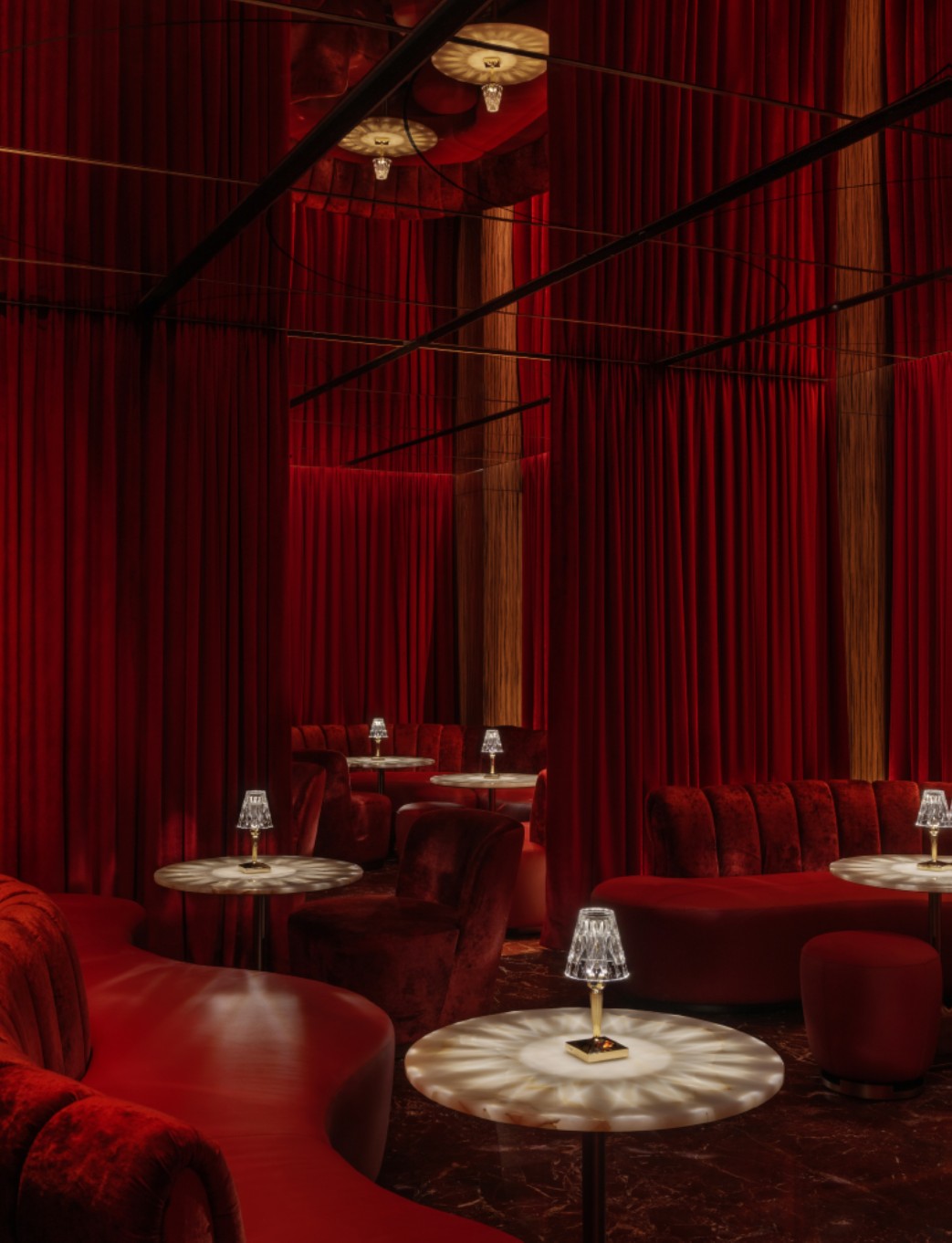
In practical terms, this means a floor that moves, over the course of a single day, through a carefully choreographed rhythm. At six in the morning, it is a silent meditation hall — floor-to-ceiling windows facing east, the first light of the Atlantic arriving through glass, a low bowl of still water at the center of the room. By midmorning, the same space becomes a movement studio, with a rotating roster of teachers drawn from New York, Milan, and Tokyo. By late afternoon, the wellness floor's secondary spaces — the Hamam, the cold plunge, the salt cave — are operating at full capacity. By evening, the lounge areas transform, with discrete bar service, into what can only be described as one of the most unusual social spaces in any luxury building in the Americas.
En términos prácticos, esto significa un piso que se mueve, a lo largo de un solo día, a través de un ritmo cuidadosamente coreografiado. A las seis de la mañana, es una sala de meditación silenciosa — ventanas del piso al techo mirando al este, la primera luz del Atlántico llegando a través del vidrio.
In termini pratici, questo significa un piano che si muove, nel corso di una singola giornata, attraverso un ritmo attentamente coreografato. Alle sei del mattino, è una sala di meditazione silenziosa — finestre dal pavimento al soffitto rivolte a est, la prima luce dell'Atlantico che arriva attraverso il vetro, una bassa ciotola di acqua ferma al centro della stanza. A metà mattina, lo stesso spazio diventa uno studio di movimento, con un roster rotante di insegnanti provenienti da New York, Milano e Tokyo. Nel tardo pomeriggio, gli spazi secondari del piano del benessere — l'Hamam, il bagno freddo, la grotta di sale — funzionano a piena capacità. Di sera, le aree lounge si trasformano, con servizio bar discreto, in quella che può essere descritta solo come uno degli spazi sociali più insoliti in qualsiasi edificio di lusso nelle Americhe.
Em termos práticos, isso significa um piso que se move, ao longo de um único dia, através de um ritmo cuidadosamente coreografado. Às seis da manhã, é uma sala de meditação silenciosa — janelas do piso ao teto voltadas para leste, a primeira luz do Atlântico chegando através do vidro, uma tigela baixa de água parada no centro da sala. Na metade da manhã, o mesmo espaço se torna um estúdio de movimento, com um elenco rotativo de professores de Nova York, Milão e Tóquio. No final da tarde, os espaços secundários do piso de bem-estar — o Hamam, o mergulho frio, a caverna de sal — estão operando em plena capacidade. À noite, as áreas de lounge se transformam, com serviço de bar discreto, no que só pode ser descrito como um dos espaços sociais mais inusitados em qualquer edifício de luxo nas Américas.
"Wellness is not an escape from your life. It is the condition that makes your life possible. The Source was designed to remove the artificial distinction between taking care of yourself and living well."
— From the Source by Delano Founding Brief
"El bienestar no es un escape de tu vida. Es la condición que hace posible tu vida. The Source fue diseñado para eliminar la distinción artificial entre cuidarse y vivir bien."
— Del Brief Fundacional de The Source by Delano
30k
Square Feet of Wellness
Pies Cuadrados de Bienestar
Metri Quadri di Benessere
Metros Quadrados de Bem-Estar
12
Treatment Rooms
Salas de Tratamiento
Sale Trattamenti
Salas de Tratamento
24/7
Residential Access
Acceso Residencial
Accesso Residenziale
Acesso Residencial
The Spatial Plan
El Plan Espacial
La Planimetria
O Plano Espacial
The Source occupies two full floors of the tower, connected by a single sculptural staircase clad in travertine and warm bronze. The plan is intentionally non-linear — there is no single corridor you walk down, no prescribed sequence of rooms to pass through. Instead, the floor has been organized as a series of interconnected environments, each designed for a specific quality of experience, and residents can move between them in whatever order the moment calls for.
The Source ocupa dos plantas completas de la torre, conectadas por una única escalera escultural revestida en travertino y bronce cálido. El plan es intencionalmente no lineal — no hay un solo corredor por el que caminas, no hay una secuencia prescrita de habitaciones por las que pasar.
The Source occupa due piani completi della torre, collegati da una scala scultorea singola rivestita in travertino e bronzo caldo. Il piano è intenzionalmente non lineare — non c'è un singolo corridoio in cui cammini, nessuna sequenza prescritta di stanze da attraversare. Invece, il piano è stato organizzato come una serie di ambienti interconnessi, ognuno progettato per una qualità specifica di esperienza, e i residenti possono muoversi tra di loro in qualunque ordine il momento richieda.
The Source ocupa dois andares completos da torre, conectados por uma única escada escultural revestida em travertino e bronze quente. O plano é intencionalmente não-linear — não há um único corredor em que você caminha, nenhuma sequência prescrita de quartos para passar. Em vez disso, o andar foi organizado como uma série de ambientes interconectados, cada um projetado para uma qualidade específica de experiência, e os residentes podem se mover entre eles em qualquer ordem que o momento exija.
The Hydrotherapy Gallery
La Galería de Hidroterapia
La Galleria di Idroterapia
A Galeria de Hidroterapia
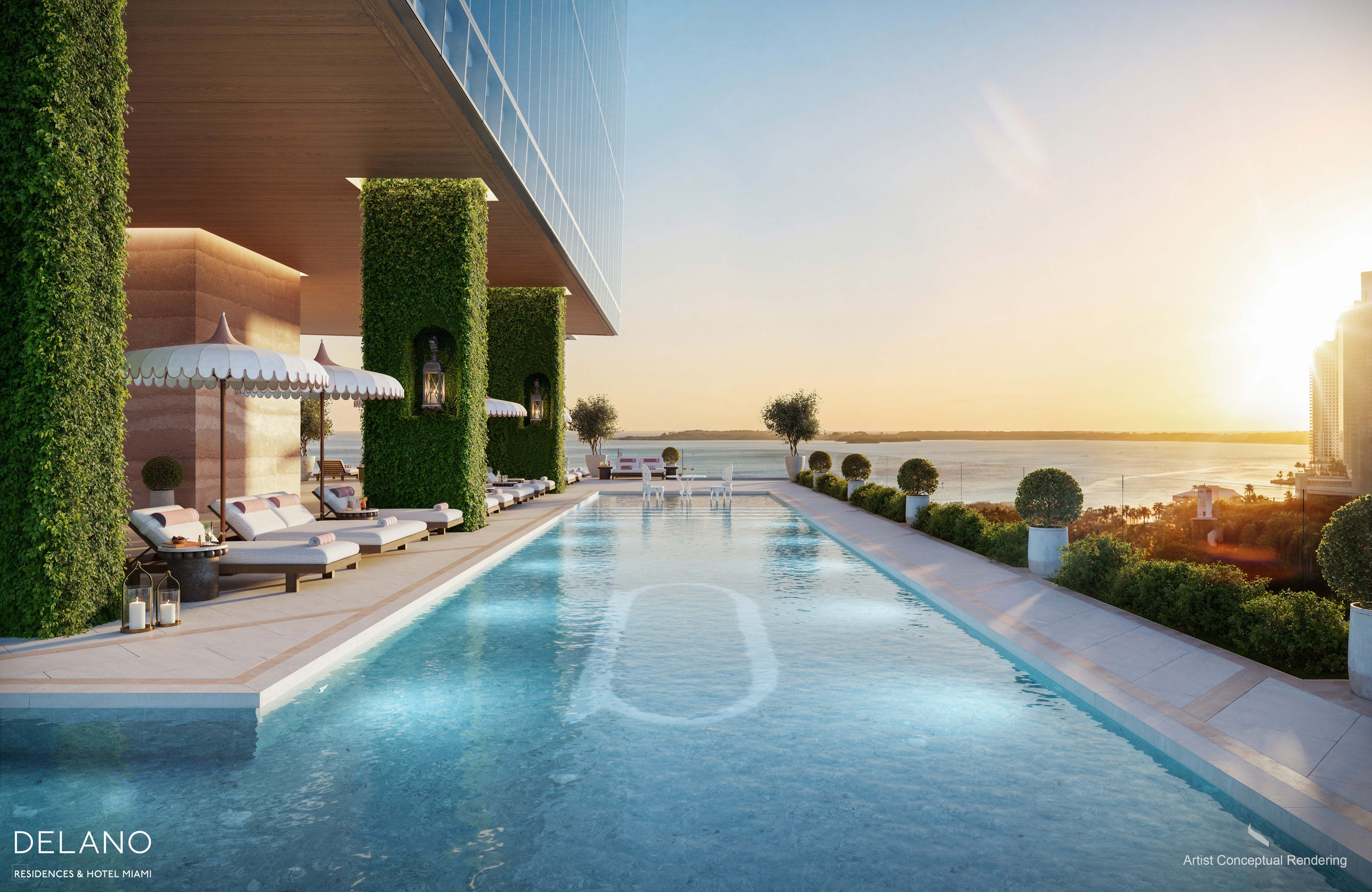
At the heart of the lower wellness floor is the Hydrotherapy Gallery, a series of stone pools arranged in temperature succession — from the heated travertine soaking tub, through the experiential rain showers, to the polar cold plunge engineered to a constant thirty-nine degrees. The sequence is based on the traditional Nordic circuit but has been recalibrated for Miami's climate, where the ambient humidity and heat reframe the entire protocol. Residents are encouraged to cycle through on their own rhythm — there is no attendant, no signage, no prescribed order.
En el corazón del piso inferior de bienestar está la Galería de Hidroterapia, una serie de piscinas de piedra dispuestas en sucesión de temperatura — desde la bañera de inmersión de travertino calentado, a través de las duchas experienciales, hasta la inmersión fría polar.
Al cuore del piano wellness inferiore c'è la Hydrotherapy Gallery, una serie di piscine di pietra disposte in successione di temperatura — dalla vasca da bagno in travertino riscaldata, attraverso le docce di pioggia esperienziali, al tuffo d'acqua fredda polare progettato per una costante di trentanove gradi. La sequenza si basa sul tradizionale circuito nordico ma è stata ricalibrala per il clima di Miami, dove l'umidità e il calore ambientale riquadrano l'intero protocollo. Ai residenti è incoraggiato di ciclo attraverso il proprio ritmo — non c'è addetto, nessuna segnaletica, nessun ordine prescritto.
No coração do andar de wellness inferior está a Hydrotherapy Gallery, uma série de piscinas de pedra dispostas em sucessão de temperatura — da banheira de imersão em travertino aquecida, através dos chuveiros de chuva experienciais, ao mergulho de água fria polar projetado para uma constante de trinta e nove graus. A sequência é baseada no circuito nórdico tradicional, mas foi recalibrada para o clima de Miami, onde a umidade e o calor ambiente redefinem todo o protocolo. Os residentes são encorajados a percorrer em seu próprio ritmo — não há atendente, nenhuma sinalização, nenhuma ordem prescrita.
The heated soaking pool of The Source — one of several hydrotherapy environments arranged to form a traditional Nordic circuit, calibrated for Miami's climate.La piscina calentada de The Source — uno de varios ambientes de hidroterapia dispuestos para formar un circuito nórdico tradicional, calibrado para el clima de Miami.
The Movement Studios
Los Estudios de Movimiento
The Movement Studios
The Movement Studios
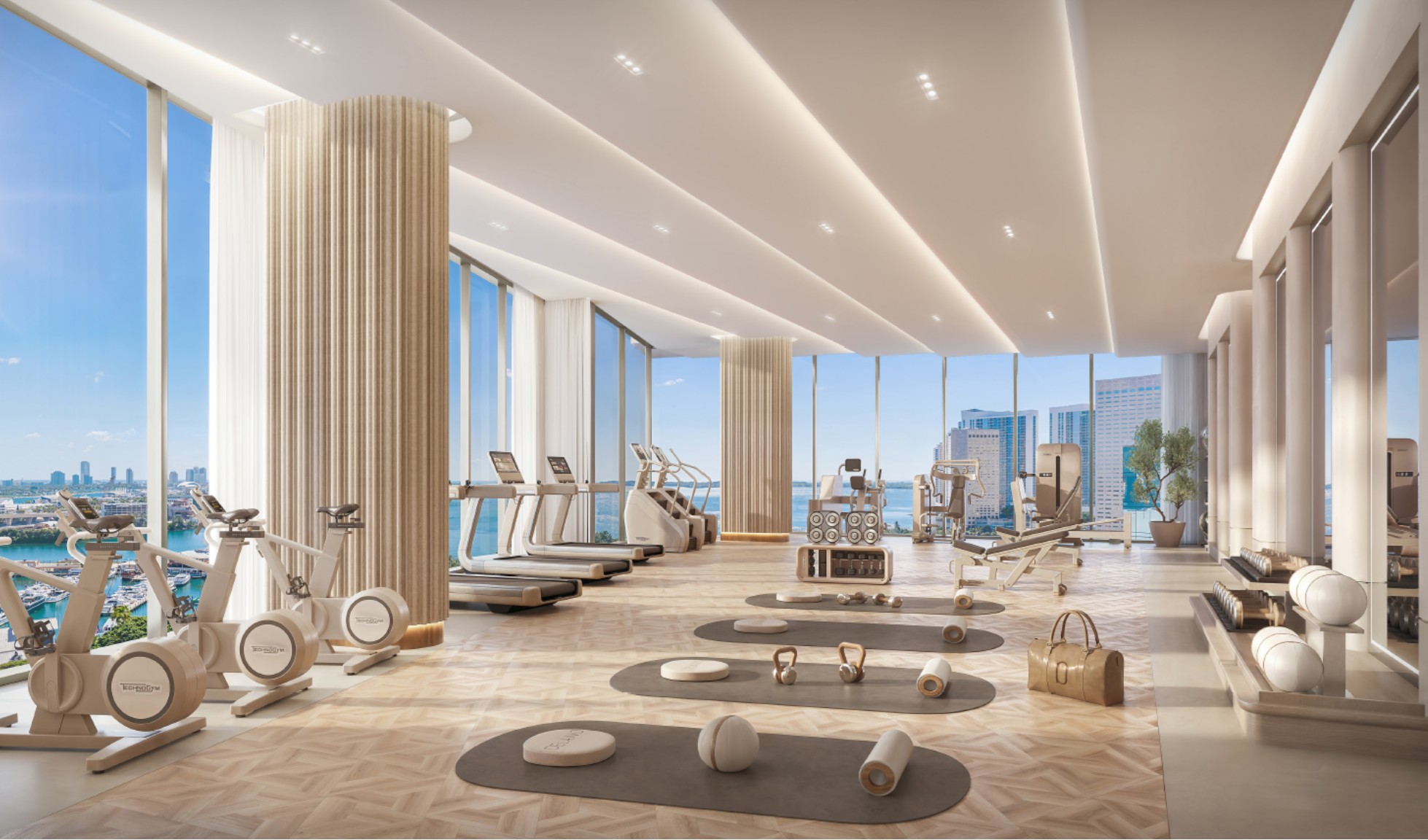
Three dedicated studios on the upper wellness floor host the movement program. The largest — a room with east-facing views designed around the quality of morning light — is used for vinyasa yoga, mat pilates, and a weekly moving meditation practice led by a visiting teacher from Kyoto. The two smaller studios accommodate reformer pilates, boxing, and a specialized mobility program developed in collaboration with the team behind the rehabilitation protocol of a leading international ballet company.
Tres estudios dedicados en el piso superior de bienestar albergan el programa de movimiento. El más grande — una habitación con vistas al este diseñada alrededor de la calidad de la luz de la mañana — se usa para yoga vinyasa, pilates en colchoneta y una práctica semanal de meditación en movimiento.
Tre studi dedicati al piano benessere superiore ospitano il programma di movimento. Il più grande — una stanza con vista a est progettata intorno alla qualità della luce mattutina — è utilizzata per yoga vinyasa, pilates su tappeto e una pratica di meditazione in movimento settimanale condotta da un insegnante ospite da Kyoto. I due studi più piccoli ospitano pilates riformatore, boxe e un programma di mobilità specializzato sviluppato in collaborazione con il team dietro il protocollo di riabilitazione di una compagnia di balletto internazionale leader.
Três estúdios dedicados no andar superior de bem-estar hospedam o programa de movimento. O maior — uma sala com vista para o leste projetada em torno da qualidade da luz matinal — é usada para yoga vinyasa, pilates de tapete e uma prática semanal de meditação em movimento liderada por um professor visitante de Kyoto. Os dois estúdios menores acomodam pilates reformador, boxe e um programa de mobilidade especializado desenvolvido em colaboração com a equipe por trás do protocolo de reabilitação de uma companhia de balé internacional líder.
The Treatment Suites
Las Suites de Tratamiento
Le Suite di Trattamento
As Suítes de Tratamento
Twelve treatment rooms occupy the quieter western wing of the wellness floor, each with a private outdoor terrace that can be enclosed for treatments requiring full privacy or opened to the Biscayne Bay breeze when the protocol allows. The treatment menu has been developed in partnership with practitioners drawn from four continents — Ayurvedic physicians from Kerala, traditional Chinese medicine specialists from Shanghai, a biodynamic facialist from the Alpes-Maritimes, a lymphatic drainage expert from São Paulo. The resulting menu is deliberately small — fourteen treatments in total — but each has been selected for its verifiable therapeutic value rather than for its atmospheric appeal.
Doce salas de tratamiento ocupan el ala oeste más tranquila del piso de bienestar, cada una con una terraza privada al aire libre que puede cerrarse para tratamientos que requieren privacidad completa o abrirse a la brisa de la Bahía Biscayne cuando el protocolo lo permite.
Dodici sale trattamenti occupano l'ala occidentale più tranquilla del piano del benessere, ognuna con una terrazza privata esterna che può essere chiusa per trattamenti che richiedono privacy totale o aperta alla brezza di Biscayne Bay quando il protocollo lo consente. Il menu dei trattamenti è stato sviluppato in partnership con operatori provenienti da quattro continenti — medici ayurvedici dal Kerala, specialisti di medicina tradizionale cinese da Shanghai, un'estetista biodinamica dalle Alpi Marittime, un'esperta di drenaggio linfatico da São Paulo. Il menu risultante è deliberatamente piccolo — quattordici trattamenti in totale — ma ognuno è stato selezionato per il suo valore terapeutico verificabile piuttosto che per il suo appeal atmosferico.
Doze salas de tratamento ocupam a ala ocidental mais tranquila do piso de bem-estar, cada uma com um terraço privado ao ar livre que pode ser fechado para tratamentos que exigem total privacidade ou aberto para a brisa de Biscayne Bay quando o protocolo permite. O menu de tratamentos foi desenvolvido em parceria com praticantes de quatro continentes — médicos ayurvédicos de Kerala, especialistas em medicina tradicional chinesa de Xangai, uma esteticista biodinâmica dos Alpes Marítimos, uma especialista em drenagem linfática de São Paulo. O menu resultante é deliberadamente pequeno — quatorze tratamentos no total — mas cada um foi selecionado pelo seu valor terapêutico verificável em vez de pelo seu apelo atmosférico.
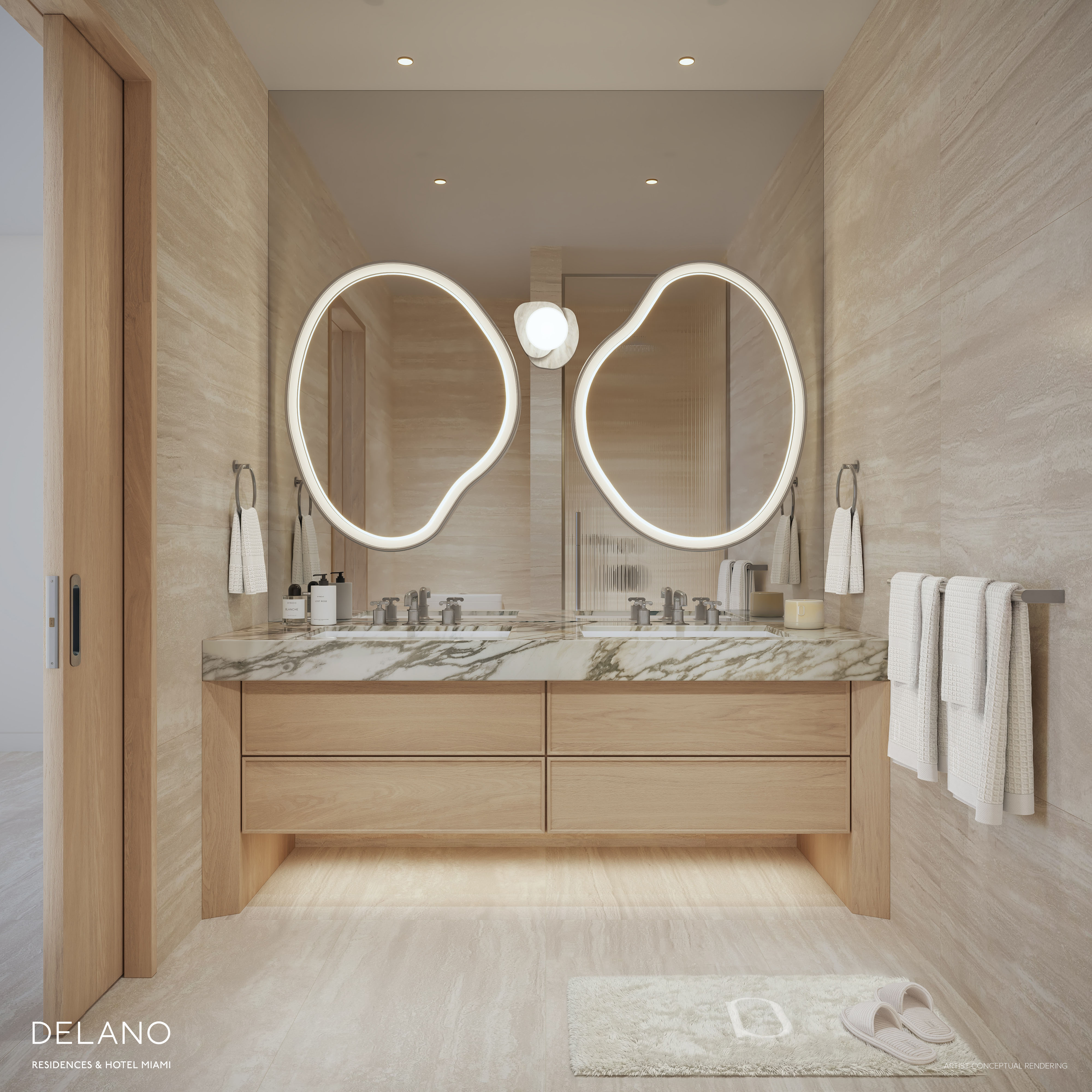
A private residential bathroom — the wellness philosophy of The Source extends beyond the dedicated floor into the materiality of every residence.Un baño residencial privado — la filosofía de bienestar de The Source se extiende más allá del piso dedicado a la materialidad de cada residencia.
A Culture, Not a Menu
Una Cultura, No un Menú
Una Cultura, Non un Menù
Uma Cultura, Não um Menu
The distinction that most separates The Source from conventional luxury spas is that it has been designed as a cultural program rather than as a fixed set of services. The rotating schedule includes resident teachers in three-to-six-month residencies, visiting workshops from international practitioners, a quarterly longevity series developed in collaboration with a leading Swiss wellness clinic, and — perhaps most unusually — an ongoing program of intellectual programming that would not be out of place at a well-run private members' club. Lectures on sleep science. Dinners hosted by nutritionists. Evenings devoted to a specific question in contemporary medicine, led by a physician from Mount Sinai or the Mayo Clinic.
La distinción que más separa a The Source de los spas de lujo convencionales es que ha sido diseñado como un programa cultural en lugar de un conjunto fijo de servicios. El programa rotativo incluye maestros residentes en residencias de tres a seis meses, talleres visitantes de profesionales internacionales, una serie trimestral de longevidad.
La distinzione che più separa The Source dagli spa di lusso convenzionali è che è stata progettata come un programma culturale piuttosto che come un insieme fisso di servizi. Il calendario rotante include insegnanti residenti in residenze da tre a sei mesi, workshop di visitatori da praticanti internazionali, una serie trimestrale di longevità sviluppata in collaborazione con una principale clinica di benessere svizzera, e — forse più inusualmente — un programma continuo di programmazione intellettuale che non sarebbe fuori luogo in un club privato ben gestito. Lezioni sulla scienza del sonno. Cene ospitate da nutrizionisti. Serate dedicate a una specifica domanda nella medicina contemporanea, guidate da un medico del Mount Sinai o della Mayo Clinic.
A distinção que mais separa The Source dos spas de luxo convencionais é que foi projetada como um programa cultural em vez de um conjunto fixo de serviços. O cronograma rotativo inclui professores residentes em residências de três a seis meses, oficinas de visitantes de praticantes internacionais, uma série trimestral de longevidade desenvolvida em colaboração com uma clínica de bem-estar suíça líder, e — talvez mais inusitadamente — um programa contínuo de programação intelectual que não estaria fora de lugar em um clube privado bem administrado. Aulas sobre a ciência do sono. Jantares hospedados por nutricionistas. Noites dedicadas a uma questão específica na medicina contemporânea, lideradas por um médico do Mount Sinai ou da Mayo Clinic.
"A great wellness floor is not a list of services. It is a rhythm you can join."
"Un gran piso de bienestar no es una lista de servicios. Es un ritmo al que puedes unirte."
"Un grande floor del benessere non è un elenco di servizi. È un ritmo a cui puoi unirti."
"Um ótimo andar de bem-estar não é uma lista de serviços. É um ritmo que você pode acompanhar."
The Residents' Dimension
La Dimensión de los Residentes
La Dimensione dei Residenti
A Dimensão dos Residentes
For residents of Delano Residences, The Source operates on twenty-four-hour residential access — meaning that the morning meditation, the late-night soak, the three-in-the-morning sauna session that occasionally becomes necessary after a long flight, are all available without friction. The residential elevators connect directly to a dedicated entrance on the upper wellness floor, preserving the division between the building's residential rhythms and its hotel-facing social rhythms. It is a level of continuous availability that, in most luxury buildings, would be unthinkable — and that has been engineered, at The Source, as one of the building's quiet fundamental commitments.
The deeper proposition is that wellness, when it is genuinely integrated into the daily rhythm of a home, ceases to be an event and becomes a condition. You do not go to The Source. You pass through it. You linger in it. You arrive at dinner, or at the morning meeting, or at the weekend's social gatherings, already held together in a way that the ordinary logic of urban life tends to dissolve. That integration — between the architecture of wellness and the architecture of daily life — is perhaps the most radical thing about the Source by Delano, and the most genuinely new.
Para los residentes de Delano Residencias, The Source opera con acceso residencial de veinticuatro horas — lo que significa que la meditación matutina, el remojo nocturno tardío, la sesión de sauna a las tres de la mañana que ocasionalmente se vuelve necesaria después de un vuelo largo, están todas disponibles sin fricción.
La proposizione più profonda è che il benessere, quando è genuinamente integrato nel ritmo quotidiano di una casa, cessa di essere un evento e diventa una condizione. Non vai a The Source. Ci passi attraverso. Ci indugi dentro. Arrivi a cena, o alla riunione del mattino, o ai raduni sociali del fine settimana, già tenuto insieme in un modo che la logica ordinaria della vita urbana tende a dissolversi. Quell'integrazione — tra l'architettura del benessere e l'architettura della vita quotidiana — è forse la cosa più radicale di The Source by Delano, e la più genuinamente nuova.
A proposição mais profunda é que o bem-estar, quando genuinamente integrado ao ritmo diário de uma casa, cessa de ser um evento e se torna uma condição. Você não vai para The Source. Você passa por ele. Você demora nele. Você chega ao jantar, ou à reunião matinal, ou aos encontros sociais do fim de semana, já mantido junto de uma forma que a lógica ordinária da vida urbana tende a dissolver. Essa integração — entre a arquitetura do bem-estar e a arquitetura da vida cotidiana — é talvez a coisa mais radical sobre o The Source by Delano, e a mais genuinamente nova.
Share this storyCompartirCondividi questa storiaCompartilhe esta história
Dora Kovacs is a licensed Florida real estate agent (License #3502193) affiliated with Keller Williams. She represents buyers and investors in Miami's most sought-after pre-construction and luxury condominium developments. Contact: dora@bnsluxury.com · (305) 781-0210 · 1000 5th St, Suite 202, Miami Beach, FL 33139.
Dora Kovacs es agente inmobiliaria licenciada en Florida (Licencia #3502193), afiliada a Keller Williams. Representa a compradores e inversionistas en los desarrollos de pre-construcción y condominios de lujo más codiciados de Miami. Contacto: dora@bnsluxury.com · (305) 781-0210 · 1000 5th St, Suite 202, Miami Beach, FL 33139.
Dora Kovacs è un agente immobiliare autorizzato dalla Florida (Licenza #3502193) affiliato a Keller Williams. Rappresenta acquirenti e investitori negli sviluppi di condomini di lusso e pre-costruzione più ricercati di Miami. Contatti: dora@bnsluxury.com · (305) 781-0210 · 1000 5th St, Suite 202, Miami Beach, FL 33139.
Dora Kovacs è un agente immobiliare autorizzato dalla Florida (Licenza #3502193) affiliato a Keller Williams. Rappresenta acquirenti e investitori negli sviluppi di condomini di lusso e pre-costruzione più ricercati di Miami. Contatti: dora@bnsluxury.com · (305) 781-0210 · 1000 5th St, Suite 202, Miami Beach, FL 33139.
Private Pricing Available
Precios Privados Disponibles
Prezzo Privato Disponibile
Preço Privado Disponível
Interested in Delano Residences?¿Interesado en Delano Residences?Interessato a Delano Residences?Interessado em Delano Residences?
Receive the full residence catalogue, current pricing, and available floor plans — delivered privately within minutes.
Reciba el catálogo completo de residencias, precios actuales y plantas disponibles — entregado en minutos.
Ricevi il catalogo completo delle residenze, i prezzi attuali e le planimetrie disponibili — consegnati privatamente in pochi minuti.
Receba o catálogo completo de residências, preços atuais e plantas disponíveis — entregues em privado em poucos minutos.
or fill manuallyo completar manualmenteo compila manualmenteou preencha manualmente
✓ Thank you. Your private pricing package is on its way.✓ Gracias. Su paquete de precios está en camino.✓ Grazie. Il tuo pacchetto di prezzo privato è in arrivo.✓ Obrigado. Seu pacote de preço privado está a caminho.